Monday, 4 October 2010

Sound

30th September 2010          Miss lecointe


Lesson Objective: To be able to show an understanding of how sound is used to create meaning.

Lesson Outcomes:
All will be able to explain the purpose of one sound technique (E)
Most will be able to identify and explain the purpose of 2-4 sound techniques (C)
Some will be able to use media language effectively to explain the purpose of 5 or more different sound techniques (A)

Sound code: This is the type of music in a text can convey a great deal of information, about the mood and of the text. Tension and emotions can be helped by the music.
I watched the shower scene in Psycho as an example of sound code. Violins were played during beginning; this made the mood calm and airy. There was a sharp screech as the lady got attacked. This shows that there was danger. At the start of the scene, the pitch was low; this showed calmness. Then as the lady got attacked, the pitch then got high. This may have been to show how scared the lady was (by screaming.) During the middle of the scene when the lady was having a shower, it was silent. This brought suspense to the audience that something bad might happen.
Here is the clip for the famous shower scene of Psycho:


This type of sound would help me in my thriller film because it will help me create a certian mood from the audience. For example if i wanted to create suspense i would use pianos to slowly play through the scene. This will leave the audience on the edge of their seat waiting on what will happen next.


Diegetic: This is sound you would expect to hear in the film world. It belongs with the frame. It will be the natural part of the narrative. Not always visible.
I watched a scene in Kidulthood as an example of Diegetic. In this scene we heard bottles smashing and cars driving by. There was no sound added on and we know this because we could see the sound happening.
Here is the clip for the "Old enough blud" scene in Kidulthood:

This type of sound will help me in my thriller film because it would make my film more realistic. For example if a glass fell on the floor, you would expect it to make a smashing noise but if it doesn't then it may create confusion to the audience and may cause them to loose concentration and focus from the film. So i will make sure that in my film i will have diegetic sound like someone walking in high heels and you hear the heels on the floor.


Non-diegetic: This is sound or music that is added, such as in the editing scene.
We watched the fight scene of X-men. The nightcrawler was trying to attack the president of America. There was music playing as the man was trying to dodge and attack to bodyguards for the president. This music brought suspense to the audience because the music was as fast as the action going on. As the men were punching each other, the sound was very exaggerated. The punch's were louder than they really were; this may have been used to make the punch's sound more painful than they really are. This may have brought sympathy.

Here is the clip for the Night crawler fight scene of X-men:


This type of sound will help me in my thriller film because it will help me to create more of a dramatic effect. For example if there was a fighting scene in my film, i may add on punching noises to create more a dramatic effect that someone is getting punched. Also diegetic sound may not be heard so it would be better to add on sound.

Rhythm of the music: This can dictate the rhythm of cuts, such as in fight scenes to create tension.
This type of sound was used in the above clip. As there was more danger to the president, the music got more faster. This would create suspense to the audience and may leave them at the edge of there seats. This type of sound would help me in the making of my thriller film because if i wanted to create even more suspense to the audience then i would use this type of sound.
Silence: creates tension.

Voice over narration: This is when dialogue is added on in the editing stage and it is usually used to explain things that have already happened.
I watched a clip from Texas Chainsaw Massacre as an example for Voice over narration. The narrator was talking about what was going through the scenes on the screen. This type of scene sounds like it should be for a documentary. The only other time this is usually used is when films are a tale based on a true story.

This type of sound will help me in my thriller film only if my film will be based on a true story. This way the persons life we're filming can narrate their own film in a film.


Sound bridge: this is when sound can be used as a bridge to maintain continuity in a sequence by running a soundtrack under a series of images to link them together, or to create a transition from one scene to another.
Parallel sound: This is when the sound and the image complement each other.
Contrapuntal Sound: This is when the sound and image don’t complement each other. Happy music played over something sad happening on the screen.)
We watched Clockwork orange as an example of Contrapuntal. People were being attacked by these burglars who were also beating up the couple, they were singing the song 'singing in the rain.' This is a happy song and the fact that they were singing it during the attack brought humour even though it's not funny.
Here is the URL of the 'brak-in-scene' of clockwork orange: http://www.youtube.com/watch?v=faML0QvVb2A

This may help me in my thriller film because it will interest the audience more because it may bring humour or confusion.

There are many different ways in which music is used in films, but the main purpose of music is to create different moods, tones and emotions. Also it can help the audience to understand a scene in more detail too.

In this lesson I learnt the different sound types used whilst making a film. This lesson will help me in the making of the opening scene of my thriller film because i can make my own version of the examples i saw of the different sound types.

Friday, 1 October 2010

Cinematography

24th September 2010     Miss Lecionte
Learning objective: Show understanding of the term cinematography and how it is used within thriller films.
Lesson outcome:
All: Be able to identify and describe at least one camera element. (E)
Most: Be able to identify and explain 3 or more camera elements with examples. (C)
Some: Be able to use media language correctly to analyse the effects the camera shots have with appropriate examples. (A)
The three main elements that make up cinematography are:
-          Camera movements
-          Camera angles
-          Camera positions
Camera positions

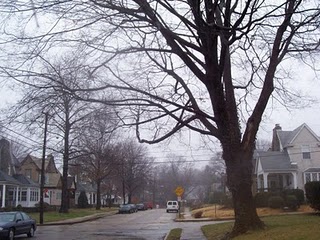
This is an example of a Long shot (LS). This shot shows a fairly large subject (such as a person) and usually much of the surrounding. In this example you can see the characters. Also the flood is taking up half of the shot. This would help the audience to see what the character is doing as well as the location and situation their in. So this shot would help me in my thriller film because it can bring suspense to the audience by the characters actions or what position they are in. 


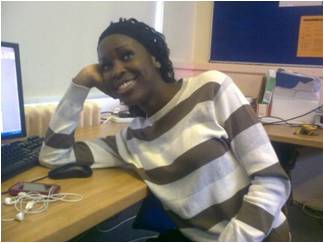
Here is another example of a Long shot (LS) which I took in school. This exercise helped me because now i have a rough idea about how to measure the right shot and how far or close i should be to the character for when im using a camera to film.


This is an example of an Extreme long shot (ELS). This shot is sometimes used as an establishing shot. This is because the camera is at its furthest distance from the subject, emphasising the background and also reducing the importance of the subject. In this example there is no subject but it shows us a location. This shot can help me with making a thriller film because it can show the location of my scenes. I would prefer to use this shot than I establishing shot if there was a character in the scene because although you won’t focus on the character, you will still be able to see it. This shot can be used in any part of the film, but with an establishing shot, it would usually be only at the beginning of the film.


This is an example of an Establishing shot (ES). This shot defines the location and gives the audience a perspective on the action that is to follow. This shot is similar to an extreme long shot and is used to define a genre. From this example I would determine that this would have been taking from a thriller film; this is because of the dark atmosphere. This shot will help me with my thriller film because it will make the audience determine what genre my film is. This is why I need to make my establishing shot look like it’s a thriller film. I can do this by using low key lighting like in the example.


This is an example of a Master shot (MS). This shot is similar to the establishing shot as they are both used at the beginning of a film. Although this shot is used at the beginning of the sequence as a reference point for the rest of the film. This is an example of New York City. This shows us that the location of the film will continue to be in New York City. This shot will help me in my thriller film because as it determines the location throughout the film; the buildings/atmosphere may show us the genre of the film.


This is an example of a Medium long shot (MLS). This is when the shot focus on the subject from the knees upwards. It also permits a balance between the subject and surrounding. This is an example from the film 'Unborn'. Because the shot is from her knees, it makes a balance between her and the background she is in. This shot will help me in my thriller film because if i wanted to show the character but no focus their facial reaction but their actions around the location their at then this would be the perfect shot.


This is an example of a Medium shot (MS). This is when the camera frames the actor from the waist up. This is from the film 'Friday the 13th'. This shot makes us focus more on the character than the background. This shot will help me in my thriller film because the audience focuses on the character more. So this shot would be suitable for a scene where we focus on the characters and their actions.

Here is another example of a Medium shot (MS) which I took in school. This was part of a excercise I did in class to help us to know about shots. This exercise helped me because now i have a rough idea about how to measure the right shot and how far or close i should be to the character for when im filming.


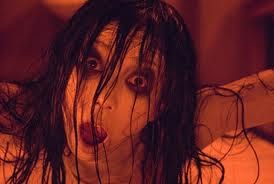
This is an example of Close up (CU). This shows a fairly small part of the scene and emphasises on something, such as a characters face expression and neck in detail that it fills the screen. This is a scene from 'Grudge'. As you can see when you first look at the example you look at the characters face expression. This shot will help me in my thriller film because showing the characters face expression will either bring sympathy, suspense etc.
Here is another example of a Close up (CU) which I took in school. This exercise helped me because now i have a rough idea about how to measure the right shot and how far or close i should be to the character for when im filming.


This is an example of an Extreme close up (ECU). This shot singles out a portion of the face isolates detail and magnifies the minute. This example shows a scene from 'Grudge'. As you can see we focus on the eye on her face. This shot will help me in my thriller film because if I wanted to make the audience to focus on a certain feature on a character then I would use this shot. Also it allows the audience to get up and personal with the character.


This is an example of a Point of view (POV). This shot implies that the camera is looking from the eyes of the subject. This shot can help in my thriller film because it will add suspense. It also gives the audience the chance to see what’s going on form the characters eyes.


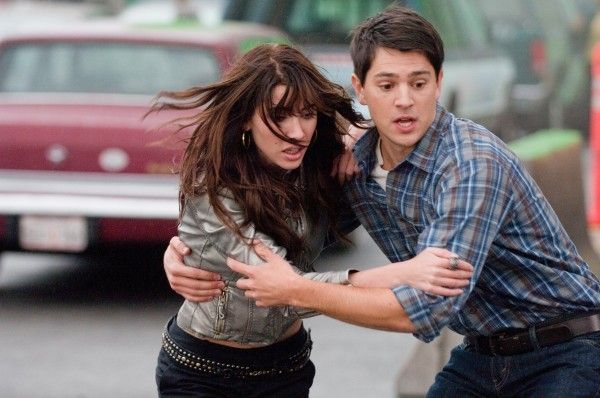
This is an example is a Two shot (TS). This shot is where two people are featured in the frame. This example is from 'Final destination'. This shot can help me when I’m making my thriller film because I can use this shot to show the audience the actions of two characters at the same time.


This is an example of an Over the Shoulder shot. This is where the camera is placed at shoulder level and is shot this way. This is an example from 'Grudge' and shows us that the character cannot see that there’s someone behind her. This shot will help me in my thriller film because it will bring suspense to the audience especially if there’s someone behind a character and they can't see.


.
This is an example of an Over Head shot. This shows the subject and surrounding to get more of an impact on what’s happening. From the example this shot could also be used as a point of view shot because the two people could be looking up at someone. This shot can help me in my thriller film because it can show where a character may be heading and this may bring suspense to the audience because the character may be running away from something


Camera angles
Straight on angle is the most common angle used, an angel that is at eye line level facing straight on.

High angle shot is a shot that captures the action or subject from high up looking down.


Low angle shot is a shot that captures the action or subject frown a low angle looking up.


Camera movements
Zoom is when the camera doesn’t move and the lens is focused down from the long shot to the close up, whilst recoding. This can by used when to show an emphasise on a characters face. An example is from one Flew Over The Cuckoo's Nest. Here is the URL for the clip: http://www.youtube.com/watch?v=DCUmINGae44 From 53 seconds till the end the camera is zooming. This would create more sympathy to the audince because the zoom was very slow and we we're focussing on the characters face expression. 
Altough if the zooming was fast then it would make the audience focus on a certain part of the scene quicker. This type of zoom was is underneath and is from Friday the 13th. From 1.22 seconds to 1.28 seconds there is a zoom. This would make the audience feel part of the film as they are drawn in. This type of camera movement would help me in my thriller film because I can zoom in on a certain item or face expression to make the audience focus there more.


 Tracking (dollying) is when the camera itself is moved smoothly towards away from the subject while the focus remains constant. Tracking in (like zooming) draws the audience into a closer relationship with the subject, moving away tends to create emotional distance. Underneath is an example of tracking. From 11 seconds to 29 seconds shows tracking.


Tracking back tends to divert attention to the edges of the screen and the speed of tracking may affect the viewer’s mood.
Pan is when the camera moves from left to right or right to left to follow a moving subject. Underneath is an example of tracking in the film One lew Over The Cuckoo's Nest. From 36 seconds to 42 seconds panning is used. Because the camera is following the character, this can be considered tracking pan. This camera movement can help me in the making of my thriller film because it will allow me to show the audience a large part of the a scene from standing from one place.


Whip pan is when a very fast pan causes the subject to blur.

Handheld camera is used to produce a jerky, bouncy, unsteady image, which can create a sense of immediacy or chaos. This would be a good movement i my thriller film as it can cause suspese to the audiece and make them feel like they are looking at the scene from the characters point of view; so they feel part of the film. In my film i would use this type of movement as it is an easy technique to produce a sense of chaos.

Steadicam is a handheld camera worn as a kind of harness. It uses a gyroscope system to ensure the camera remains perfectly level and smooth as the camera moves. As you can see from the picture on the left, there some equipment that is needed. This is expensive and my school does not provid this so i will no be using a steadicam. My alternative to this will be a tripod. This will allow the camera not to be jerky while recording.


Tilt shot is when the camera moves up and down or down and up from a fixed axis.
Crane shot is a camera that is mounted on a crane and it moves around at a distance above ground level and it can move up or down. As you can see from this image a crane shot requires equipment that the school doesn't provide and i can't afford. So i would not be using this in my thriller film. The alternative of using a crane shot is to take the shot from a window.
 
Rolling shot is a camera that moves diagonally, which makes the image askew (often used to show that a character is drugged/drunk.)
Aerial shot is where the camera looks down on something and it is like a bird eye view shot.

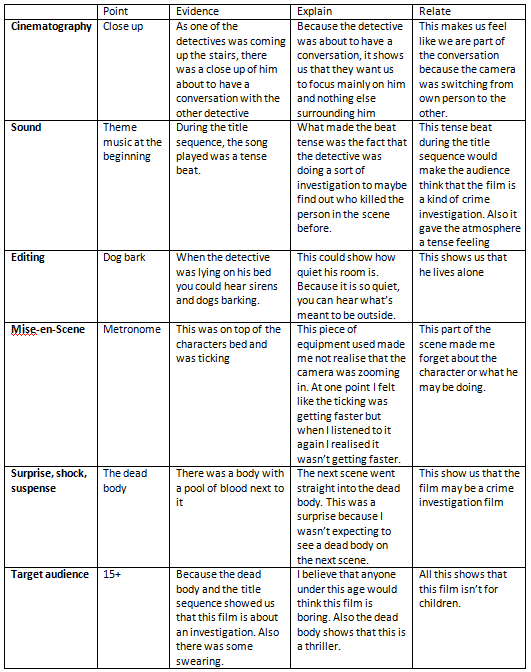
I watch the opening of Face Off. Underneath is a table of the work i did in the lesson. This table shows the amount of mid shots and panning i saw in the film:
In this lesson i have learnt about cinematography. I believe that cinematography is important in makinig a film because different types of angles and positioning makes different types of effect on the audience. So by doing cinematography, i can make the audience react in a certain way of my choice. This will help me in making the opening scene of my thriller film because i can make appropriate terminology whilst evaluating my work.

Blogs- AS Media

20th September 2010       Miss Fisher

Learning Objective: To create a working blog

http://www.blogger.com/
This is how the examiner asses you

User: OAHtolubarnes
Password: OAHpassword                       Remember to add learning objective!

On the blog:
- What you have done
- How you did it
- What you have learnt
- How can you use the work/ learning for you own production.
Give each post a title

List of the work i've carried out already:
- Genre
- Title

zoe.fisher@oasishadley.org

We watched a 2minute video about how to use blogger. In this lesson i learnt how to use blooger.

What is media studies?

20th September    Miss lecionte

In this lesson we had to write down what we thourght was media studies.
I said that media studies is about advertising, film production and how a camera works.
We then looked at some pictures and talked about how the media can make us believe almost anything. The way they display something can make us believe the other.
In this lesson i learnt that the media is very important in our daily lives and media is everywhere. This lesson will help me in my opening scene of my thriller film because it made me realise that i can make the audience believe something more and bring more of an impact.

AS Media- Intro to thriller films

14th September 2010          Miss Lecionte

Things you need to consider when making a film:
- Location
- Sound
- Camera movements/ shots
- Characters
- Target audience/ reception
- Buget
- Lighting
- Genre
- Generic convections
- Editing
- Team work

Genre: The type or category of film the audience is waatching.
Generic Convection: What you expect to see in a film
Narrative: The storyline/ plot of the film

Cinematorgraphy Terminology
Is made of three elements:

Tracking: The camera itself is moved smoothly towards or away from the subject while the focus remains constant. This would allow the audience to feel like they are with the character. Tracking shots were originally called Cabiria shots after they were first used by Giovanni Pastrone in Cabiria (1914). I can use this shot in my Thriller film by adding it in a scene where someone is being followed. For example if a stalker was behind a young vulnerable girl and she didn't know, the audience will be able to see both of them in one shot and this would cause suspense as the girl doesn't know someone is following her.


Panning: The camera moves from left to right or right to left to follow a moving subject. a pan shot would usually be used when the characters is walking. I can use this in my Thriller film when i am showing a surrounding of a location. For example if i was to show a scary location of a thriller film, i would use a panning shot so the audience can view where the scene is being shoot.


Zooms: When zooming in the camera does not move and the lens is focused down from long shot to close up, whilst recording. This shot would help me in my Thriller film when i am showing a certain characters face expression. For example if someone had just died in someone's arms, the camera would zoom in to show the characters face expression. This would cause sympathy to the audience as they can see closely how the character is feeling.

Angle of shot: Conventionally subjects is framed at eye level and there are three categories
High: High angle (Looking down)
Low: Low angle (Looking up)
Straight: Straight (most common)

Positioning
Mid: This is when the camera frames the actor from the waist.
Close: This shows a fairly small part of the scene and emphasises on something, such as a characters face and neck in detail that it fills the screen.
Establising: This defines the location and gives the audience a perpective on the action that is to follow. Also they are often essential to defining a genre.

In this lesson i hav learnt what cinematography is and what makes up cinematography. This will help me in the making of my opening scene of thriller film because now i know what to call certain movemnts that cameras makes. This will also help me to explain and evaluate my work in more terminology which will gain me more marks.


Opening scene of Se7en


Opening scene of Panic Room


 Opening scene for Saw6


This was my homework that miss lecionte set for me. I had to evaluate the openings of some films. I then choose to evaluate saw 6. I did this because this is a thriller film and this will help me to evaluate my own work when i finish making the opening of my thriller film. This also gives me pratise to evaluate films.

Genre

10th Septmember 2010       Mrs Fisher


Learning objective: To be able to identify's a films genre.

Keywords
Conventional: What you expect (from a genre)
Unconventional: What you would not expect (from a genre)
Diegetic sound: The sound that comes from the film world.
Non-diegetic: The sound wouldn't be heard in the film world

We did a task where we had to choose two genres and decide on what elemet you would expect from this genre, below is the table of the work i done.


We watched the beginning of the film Twilight, opening to the film is below. This activity would help me on determing what genre the film would be. As i watched the film i heard dramatic sound throughout. This created suspense and tesion. The location of the begininng of the film was at a forest. From this i decided that this film would be a thriller. This is because a forest is sometimes seen as dagerous because its soo big you don't know what or who could be there; also no one lives in a forest so if a murderer killed someone no one would know. Finally there was quick jumpy camera movemnts. I think this was used to create tensio and suspense to the audience. From the quick camera movements i would think the film was either mystery, adventurous or sciece fiction. This is because these genres create suspese and exitement; quick camera movements would create this.This would help me when making my thriller film because i would know roughly what generic covections are expected of a thriller film. So when i make my film, people will know from my opening sequence that this is a thriller film from the convections that i will use.


Here is a clip from the film 'High School Musical'. As i watched this film there was many coventional elements that would go with the genre Musical. Firstly the location was at a High School. Because the name of the film is 'High School Musical', the location would mostly likely be set at a high school; if not then i don't think the name of the film would have been called High School Musical. During the film there was singing and dancing in many of the scenes. This is conventional to a musical genre film; so if i saw this i would straight away know that this is a musical genre film as no other genre bases their film on singing and dancing. This will help me in the making of my thriller film because it made me realise that the title of a film may also give away the genre of the film. Also that the name of the film should relate the the film somehow.


I watched a clip from the film 'Shaun of the dead'. When i watched this clip i thought that this film was horror/ comedy. This is because there was scenes of bloody zombies with limbs missing but still moving as though it was alive which is horror. Although there was blood and gore i find this film funny. This is because scenes such as when the men were trying to attack the zombies were funny because of what they were using to attack the zombies. This will help me in the making of my thriller film because it helped me to realised that props can be a factor that can make the audience decide on whether the film should be a comedy.

Here is the link to a clip from Shaun of The Dead: http://www.youtube.com/watch?v=OaL0lMvTSv8&feature=&p=2DA92E7AA515D3B3&index=0&playnext=1


Through this lesson i have learnt what some keywords mean such as diegetic and non-deigetic. This will help me in my work to make an opening scene to a thriller film because as i evaluate my work, i can use the appropriate key words which will gain me more marks and help improve my grade.

Course break down

9th September 2010    Miss Lecionte


Sept-Dec: You will complete your coursework
Before you break up for Christmas holidays YOUR COURSEWORK WILL BE COMPLETED
Jan-March: Exam question 1
March-May: Exams question 2
May-June: General Exam Practice

Sept-Dec
You will write a script for the opening of a thriller film

What you will need for every lesson
- A4 lined paper or A4 notepad to write on
- An A4 folder with dividers, to keep work organised
- A pen, pencil, ruler, highlighters (colouring pencils are optional but useful.)
- A USB to save your work
- A diary to keep a note of deadline, home learning and lesson requirements (notepad)
- A positive attitude to keep you motivated and engaged.

This is my first lesson and i learnt what would happen through the year of this course. This has helped me to get a rough idea of how long i would have to produce my opening scene.